


In today’s article, Scott Conditt reviews the JK Armament 155 RPX 9mm suppressor. Note that the author’s sound measurements are provided as a comparison (unsuppressed vs suppressed) and are not intended to show true values (which are certainly much louder than he recorded). The sound suppressor was loaned to the author for this review.
If you have ever shot with a suppressor, you know there is no going back. The reduction in sound, the softer recoil impulse, and the increased comfort on the line make for an entirely different experience. Suppressors not only preserve hearing, but also cut down on muzzle blast, reduce fatigue, and they enhance communication during training or drills. They also improve situational awareness by reducing distracting reports and allowing shooters to focus more on their environment and less on the sharp crack of gunfire. Suppressed shooting is not just a luxury but a practical upgrade for anyone serious about range time or field use, and it is an accessory that fundamentally changes the shooting experience.
JK Armament 155 RPX 9mm Suppressor
JK Armament’s newest entry into the Mission Configurable suppressor family is the JK 155 RPX 9mm, with an MSRP of $849. This extraordinarily lightweight and versatile suppressor is rated for nearly every firearm in your safe firing a .36 caliber or smaller projectile. From 5.56 NATO to 300 Win Mag, and from .32 ACP to .357 Magnum, the RPX 9mm is designed to be a true all-purpose suppressor.
At its core, the RPX9 employs JK’s extremely advanced baffle geometry, effectively suppressing both pistol and rifle calibers in one can. It incorporates a Grade 5 titanium blast baffle for durability under heavy use, including full-auto fire, combined with seven modular baffles machined from 7075 billet aluminum. The finish is Type III hard-anodize with Cerakote, giving it resistance to corrosion and hard wear under field conditions.
Its industry-standard HUB 1.375×24 mounting interface makes it compatible with a wide variety of setups, and it ships with an ASR-compatible Taper Mount. Included accessories are a JK 155 LT Quick Attach Taper Mount, a 2.5-inch tube, one JK 155 PRO pistol baffle, seven JK 155 LT pistol baffles, and a JK 155 LT Flash Reducer End Cap.
The modular design of the RPX9 allows the shooter to configure the suppressor for the mission. In its micro configuration with just three baffles, it measures only 3.3” long and weighs a mere 3.6 oz. At full length with all eight baffles, it still comes in at only 8.7” long and 11 oz. This ability to add or remove baffles without tools allows the end user to tailor length, weight, and suppression to the firearm and application at hand.
For this evaluation, I ran the suppressor at its full length with all baffles intact, but one of the strengths of this design is the ability to shorten it for easier handling on pistols when desired.
Rated all the way up to .300 Win. Mag., the RPX’s .36-caliber bore makes it compatible with dozens of cartridges, including 9mm, 350 Legend, .300 Blackout, .338 ARC, .308 Win, and more. With a .22-caliber end cap, it can also be run on smaller calibers such as .223/5.56 and 5.7×28. For hunting or precision shooting, its featherweight construction makes it easy to carry while still providing the benefits of suppression. Add to this JK Armament’s unconditional lifetime warranty, and the RPX stands out as one of the most versatile suppressors available today.
Supporting Products
To ensure reliable operation across platforms, JK Armament provided additional mounting solutions. The JK HUB Piston Mount Bundle (1/2-28 9mm Piston) is a spring-and-piston unit, often referred to as a Nielsen device, that allows pistols with tilting-barrel designs to cycle reliably when a suppressor is attached.
On the pistol caliber carbine (PCC) side, the JK HD War Eagle Comp / Flash Hider (1/2×28 TPI 9mm) provided a secure and repeatable mount on the Kuna, ensuring alignment and stability under rapid fire. Together, these accessories highlight the RPX’s adaptability across both pistol and carbine applications.
Test Platforms
I ran the RPX 9mm across two very different firearms to get a meaningful sense of its performance. First was the Springfield Armory Kuna pistol, a purpose-built handgun that benefits greatly from suppression. Its longer barrel and geometry produce a different sound and recoil profile than a traditional pistol, and the added control and stability make it an ideal host for extended strings of suppressed fire.
The reduced recoil impulse and enhanced comfort provided by the RPX further improved the Kuna’s controllability, making it a strong candidate for training, competition, or defensive use where volume of fire is a consideration.
The second platform was the Springfield Armory Echelon pistol equipped with its factory-threaded barrel. The Echelon has already established itself as a standout duty-size pistol with its modular Central Operating Group, superb Adaptive Grip Texture, and excellent ergonomics. Outfitted with the RPX, it delivered an entirely different feel than the Kuna, showing how the same suppressor can alter the experience depending on the host.
The recoil impulse was softened, the sound was significantly reduced, and the pistol became smoother and more enjoyable to shoot. Testing both firearms side by side provided a clear picture of what suppressed shooting can offer across platforms and how a versatile can like the RPX excels in both roles.
For optics, I outfitted both hosts with the Leupold DeltaPoint Pro. On the Echelon, the optic sat directly on the slide, taking full advantage of the pistol’s unique Variable Interface System optics mounting solution. This system made installation a breeze compared to traditional plates or adapters and provided a secure, low-profile fit that kept the sight picture consistent and fast for target acquisition.
On the Kuna, I mounted the DeltaPoint Pro using a Leupold carbine riser, which brought it to the proper height for the platform. Running the same optic across both guns provided consistency in aiming solutions, which helped me focus on how the RPX was changing the character of each firearm without having to adjust to different sighting systems.
Ammunition Lineup
To evaluate suppressed performance, Federal and Remington provided a diverse lineup of 9mm ammunition that highlighted the differences between subsonic, match-grade, competition, and carbine-specific loads.
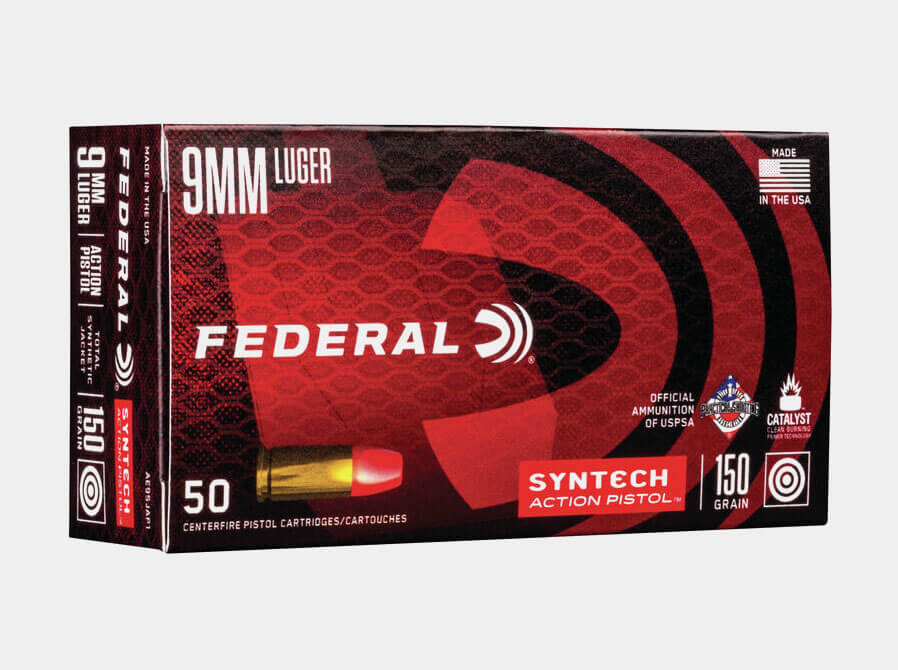
The selection included the Remington 147-grain Subsonic FNEB, the Federal 150-grain TSJ Syntech Action Pistol, the Federal 147-grain FMJ Gold Medal Action Pistol, and the Speer 135-grain Gold Dot Carbine HP. Running this mix of ammunition through both platforms allowed me to observe how each type interacted with the JK 155 RPX 9mm suppressor and how different grain weights and load designs influenced both sound reduction and overall performance.
The Federal Gold Medal load provided impressive shot-to-shot consistency, translating into excellent accuracy on the range. Its subsonic profile kept the report lower while maintaining precision performance. The Federal Syntech Action Pistol load, with its polymer coating designed for cleaner cycling and reduced fouling, delivered reliable function and consistently subsonic velocities. It proved especially well-suited for extended sessions where suppressor fouling could otherwise become an issue.
The Speer Gold Dot Carbine HP, optimized for PCC velocities, produced strong ballistic performance and reliable expansion, though it was somewhat louder than the heavier subsonics. Finally, the Remington 147-grain Subsonic offered the quietest performance by ear, pairing smoothly with the RPX in both pistol and PCC hosts.
For the end user, these results highlight the importance of ammunition selection. Heavier 147- to 150-grain rounds tend to stay subsonic, which minimizes the supersonic crack that can diminish the benefits of suppression. Carbine-specific loads like the Speer Gold Dot are engineered to take advantage of longer barrels while still working effectively with a suppressor. Match-grade offerings such as the Federal Gold Medal line provide precision and consistency that serious shooters will appreciate. Each load told a slightly different story when paired with the RPX, and it became clear that ammo choice is just as critical as the suppressor itself when looking to optimize performance.
Range Testing and Audio Metering
To evaluate the sound reduction of the RPX, I incorporated audio metering into my testing. I began by running each firearm unsuppressed to establish a baseline before moving into suppressed shooting. For each load, I fired three rounds in both the Echelon and the Kuna, followed by four additional shots suppressed, cycling through Federal Gold Medal, Federal Syntech, Speer Gold Dot Carbine, and Remington Subsonic in that order.
Disclaimer
Before getting into the readings, it is important to clarify that my setup was not laboratory grade. I used a Dayton Audio iMM-6C microphone paired with the NIOSH Sound Level Meter app, positioned about three feet from the muzzle in an active range environment.
Certified laboratory testing typically places unsuppressed 9mm handguns in the 160 dB range, with suppressed readings often falling between 125 dB and 140 dB. My readings instead captured values in the 80–100 dB range, which reflects the limitations of consumer-grade equipment, app processing, and background noise.
My intention was not to replicate lab-standard measurements but to provide a basis of comparison for suppressed versus unsuppressed fire. The raw readings included a mix of solid captures and occasional bad readings influenced by outside noise. To make the results easier to digest, I averaged the usable data for each ammunition type across both suppressed and unsuppressed conditions. The averages are presented below.
Average Sound Readings (in dB)
| Platform | Ammo Type | Unsuppressed | Suppressed |
| Echelon | Federal Gold Medal 147-gr. FMJ | 87.1 | 78.7 |
| Echelon | Federal Syntech 150-gr. TSJ | 101.0 | 88.0 |
| Echelon | Speer Gold Dot Carbine 135-gr. HP | 94.9 | 91.7 |
| Echelon | Remington Subsonic 147-gr. FNEB | 93.1 | 83.4 |
| Kuna | Federal Gold Medal 147-gr. FMJ | 90.0 | 83.9 |
| Kuna | Federal Syntech 150-gr. TSJ | 95.2 | 78.3 |
| Kuna | Speer Gold Dot Carbine 135-gr. HP | 82.9 | 84.6 |
| Kuna | Remington Subsonic 147-gr. FNEB | 86.5 | 81.4 |
Here is the full set of readings I recorded using the Dayton Audio iMM-6C microphone in conjunction with the NIOSH Sound Level Meter app. I have included every captured value for transparency, including those marked as bad readings that were either not registered correctly or clearly affected by background range noise. To make the information more digestible, I also took these recordings and averaged the reliable values to produce the comparative chart you saw earlier in this article and a visual graph (below). This way, you can see both the unfiltered raw data and the more representative averages side by side.
Full Raw Data
Springfield Armory Echelon — Unsuppressed
- Federal Gold Medal 147gr FMJ: 85.7, 83.6, 92.1
- Federal Syntech 150gr TSJ: 101.7, bad reading, 100.3
- Speer Gold Dot Carbine 135gr HP: 91.0, 98.8, bad reading
- Remington Subsonic 147gr FNEB: bad reading, 91.5, 94.6
Echelon — Suppressed (First Pass, 3 Rounds Each)
- Federal Gold Medal: 82.4, 88.2, 80.0
- Syntech: 91.8, 51.3 (bad reading, background), 90.8
- Gold Dot Carbine: 90.4, 98.9, 94.0
- Remington Subsonic: 82.1, 92.4, 88.5
Echelon — Suppressed (Second Pass, 4 Rounds Each)
- Federal Gold Medal: 62.5 (bad reading, background), 72.0, 83.1, 66.3
- Syntech: 88.6, 87.5, 87.8, 81.2
- Remington Subsonic: 72.6, 80.2, bad reading, 84.7
- Gold Dot Carbine: 90.5, 97.4, 78.7, bad reading
Springfield Armory Kuna — Unsuppressed
- Federal Gold Medal: 90.2, 89.7, bad reading
- Syntech: 81.9, 102.0, 101.8
- Gold Dot Carbine: 84.4, 81.3, bad reading
- Remington Subsonic: 85.3, 77.6, 96.6
Kuna — Suppressed (First Pass, 3 Rounds Each)
- Federal Gold Medal: 80.9, 88.0, 90.5
- Syntech: bad reading, bad reading (background), 79.9
- Gold Dot Carbine: 92.9, 72.2, 87.7
- Remington Subsonic: 79.8, 88.0, 86.3
Kuna — Suppressed (Second Pass, 4 Rounds Each)
- Federal Gold Medal: 86.3, bad reading, 68.3, 89.5
- Syntech: 82.2, bad reading, 70.1, 81.1
- Remington Subsonic: 70.9, 86.5, 71.7, 86.5
- Gold Dot Carbine: 78.1, 90.0, 60.5 (possible bad reading), 86.5
For context, the National Institute for Occupational Safety and Health (NIOSH) sets 85 dB as the maximum safe exposure limit for an eight-hour period without hearing protection. Professional laboratory testing, however, places unsuppressed 9mm pistol fire at around 160 dB, with suppressed levels often ranging from 125 to 140 dB. My readings fell far below those absolute values due to the limitations of the NIOSH app and the Dayton Audio iMM-6C microphone, but the consistent reduction I observed when comparing suppressed to unsuppressed fire remained both apparent on the meter and noticeable by ear.
One anomaly worth mentioning came from the Speer Gold Dot Carbine readings on the Kuna, where the suppressed averages occasionally appeared louder than the unsuppressed values. This should not be interpreted as the suppressor making the firearm louder. Instead, it reflects the limitations of my consumer-grade audio setup and the realities of an active range environment. Background gunfire, the way the app interprets lower-frequency suppressed reports, and additional port noise can all contribute to skewed data. By ear, the suppressed Kuna with the Gold Dot load was still noticeably more comfortable than its unsuppressed counterpart, reinforcing that subjective experience remains the more reliable measure in this context.
What stood out more than the numbers was the subjective experience. Suppressed shooting on both the Echelon and the Kuna was far more comfortable, smoother, and easier on the ears. The reduction in sharp crack was obvious, and the improvement in shootability was significant. These results underscore the benefits of suppression in real-world range conditions, showing that while the numbers provide useful context, the real value of a suppressor like the RPX is how much it changes the experience behind the gun.
Takeaways
The JK Armament 155 RPX 9mm left a strong impression throughout my testing. Its combination of titanium and aluminum construction, hard-anodized and Cerakote finish, and modular baffled cup design give it durability, adaptability, and serviceability that are rare among suppressors. The ability to easily transition between configurations, disassemble for cleaning, and move between pistol and carbine platforms makes it one of the most versatile options available today.
When paired with the Springfield Armory Kuna and the Echelon pistol, the RPX 9mm elevated both firearms by reducing sound and recoil while making each platform more enjoyable to run. The range of ammunition provided by Federal and Remington illustrated how important load choice is in shaping suppressed performance and gave me a clearer perspective on how to optimize results for different scenarios.
At the end of the day, the RPX 9mm did more than make shooting quieter. It made it smoother, more controlled, and more enjoyable across the board. For shooters seeking a suppressor that delivers real-world durability, modular adaptability, and easy serviceability, the JK Armament 155 RPX 9mm delivers exactly that and earns a place as a serious and practical upgrade for any firearms setup.
Editor’s Note: Be sure to check out The Armory Life Forum, where you can comment about our daily articles, as well as just talk guns and gear. Click the “Go To Forum Thread” link below to jump in!
Join the Discussion
Featured in this video




Read the full article here