




NEWYou can now listen to Fox News articles!
President Donald Trump’s announcement Saturday that the U.S. military began a major combat operation in Iran was met with immediate questions about whether the president improperly bypassed Congress, which has the sole authority to declare war under the Constitution.
Trump characterized the joint operation with Israel to take out Iranian leaders and eliminate its weapons supply as an act of “war,” bringing into focus the 1973 War Powers Resolution and the 2001 Authorization for Use of Military Force. Experts say those laws and court precedent have given Trump the authority to sidestep the legislative branch and attack Iran, for now.
“The courts have allowed presidents to order such attacks unilaterally. … There has historically been deference to presidents exercising such judgments under the [War Powers Resolution’s] vague standard,” George Washington University law professor Jonathan Turley wrote in an op-ed. “That was certainly the case with the attacks in Bosnia and Libya under Democratic presidents.”
The War Powers Resolution requires the president to consult Congress within 48 hours of a military offensive and cease actions within 60 days if Congress has not voted in support of them. Turley noted that Congress could still assert control over what the Pentagon is calling “Operation Epic Fury” sooner if it wanted to.
“Congress can seek to bar or limit operations in the coming days,” Turley wrote. “Given the fluid events, many members are likely to wait to watch the initial results and, frankly, the polling on the attacks. … The longer the operation continues, the calls for congressional action will likely increase.”
Former State Department official Gabriel Noronha, who advised on Iran, said in a lengthy X post that Congress has already authorized Trump’s actions under the AUMF because Iran is “the headquarters of al Qaeda.” Noronha said that, unlike other iterations of the AUMF, the 2001 version of the law was never repealed and “expressly authorizes force against any nation, organization, or person that planned the 9/11 attacks ‘or harbored such organizations or persons.'”
“Congress has had 25 years to limit the scope of the 2001 AUMF,” Noronha wrote. “Instead, it has consciously decided to preserve the President’s rights under the law to pursue international terrorists to the end of the earth.”
Trump said in a statement early Saturday morning that Operation Epic Fury was a “noble mission” and that service members could be killed, explicitly using the term “war.”
“The lives of courageous American heroes may be lost, and we may have casualties. That often happens in war,” Trump said.
Some have suggested that in planning the operation, Israel and the United States deliberately delegated responsibilities to avoid legal landmines.
A U.S. official told Fox News that the Israeli military is targeting Iranian leadership, while the United States is targeting missile sites that pose an “imminent threat,” rather than Iran’s leadership. Amos Yadlin, a retired Israeli Air Force general, also told Fox News that Israel carried out a strike on Iran’s leadership because of decades-old U.S. laws restricting the targeting of heads of state.
AMERICA STRIKES IRAN AGAIN — HAS WASHINGTON PLANNED FOR WHAT COMES NEXT?

The White House, meanwhile, has made clear that it factored Congress into the planning. Secretary of State Marco Rubio briefed the “Gang of 8,” which comprises the Democratic and Republican leaders of Congress and the top lawmakers on the intelligence committees, ahead of the action. Press secretary Karoline Leavitt said Rubio called the Gang of 8 members and gave them a heads-up on timing and connected with all but one of them. Once the strikes began Saturday morning, the Pentagon also briefed the Armed Services committees.
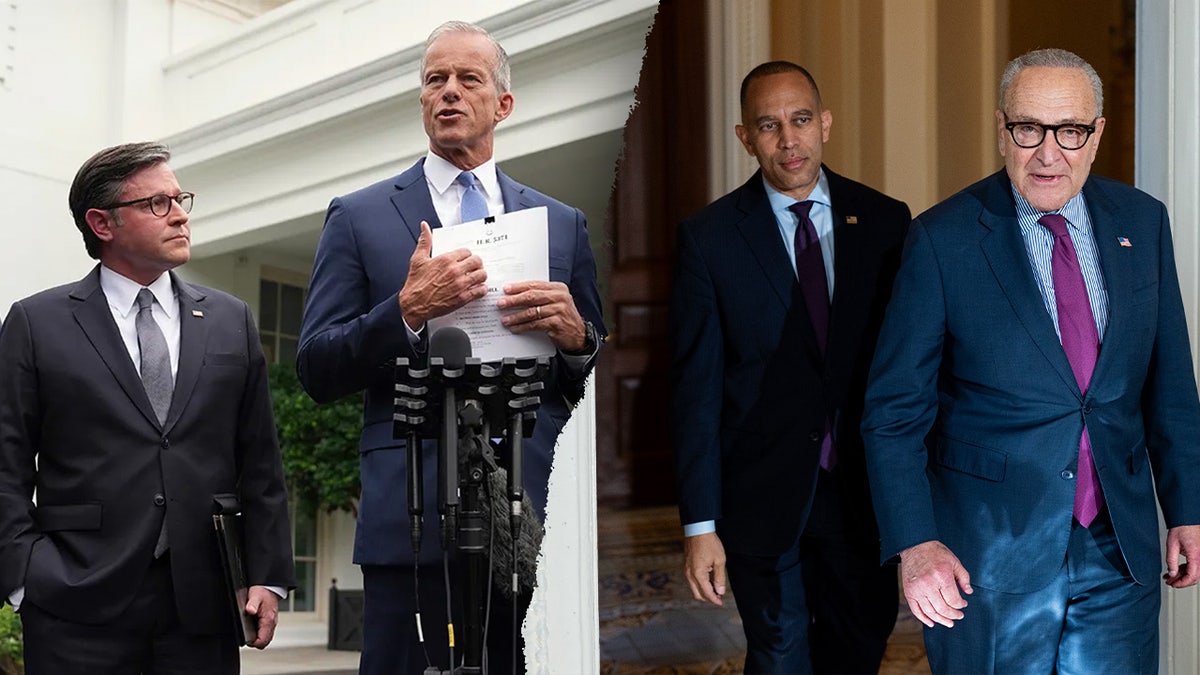
Republican lawmakers have largely reacted with support for Trump, while Democrats have been critical. House Minority Leader Hakeem Jeffries, D-N.Y., said in a statement that short of “exigent circumstances,” Trump needs Congress to authorize an “act of war.”
“The Trump administration must explain itself to the American people and Congress immediately, provide an ironclad justification for this act of war, clearly define the national security objective and articulate a plan to avoid another costly, prolonged military quagmire in the Middle East,” Jeffries said.
Sen. John Thune, R-S.D., commended the president, citing Iran’s “relentless nuclear ambitions” and refusal to engage in diplomacy.
Some non-interventionist GOP lawmakers spoke out against the actions. Sen. Rand Paul, R-Ky., said the Constitution gave Congress the power to authorize war “for a reason, to make war less likely.”
CLICK HERE TO DOWNLOAD THE FOX NEWS APP
Paul quoted President James Madison: “The Executive Branch is the branch most prone to war, therefore, the Constitution, with studied care, delegated the war power to the legislature.”
A bipartisan group of lawmakers, including Jeffries, Senate Minority Leader Chuck Schumer, D-N.Y., and Rep. Thomas Massie, R-Ky., said they are planning a forthcoming vote on a war powers resolution that would block U.S. action in Iran without congressional approval. Previous attempts to pass the same bill failed this Congress after Trump launched targeted strikes on Iran’s nuclear facilities and captured Venezuelan leader Nicolas Maduro.
Fox News’ Jen Griffin and Efrat Lachter contributed to this report.
Related Article
Read the full article here